High-fidelity surface normals
RGB-NIR observations and position-aware photometric reasoning recover contact geometry over the sensor's compliant surface.
IEEE/ASME Transactions on Mechatronics · 2025
Huazhong University of Science and Technology
01 · Overview
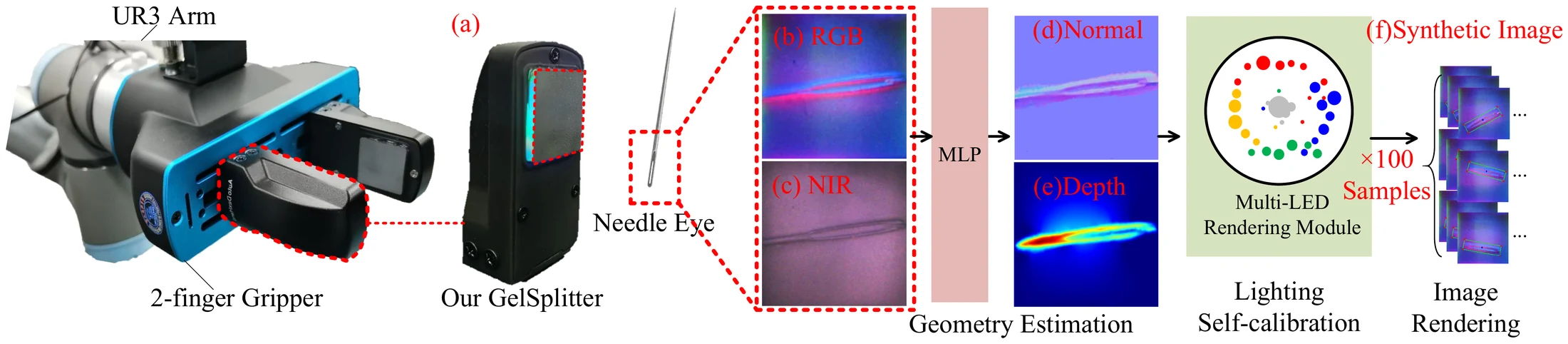
SMF-PSNN unifies surface geometry reconstruction, multi-LED illumination self-calibration, neural inverse rendering, and force-aware robotic perception within a single RGB-NIR vision-tactile sensing framework.
RGB-NIR observations and position-aware photometric reasoning recover contact geometry over the sensor's compliant surface.
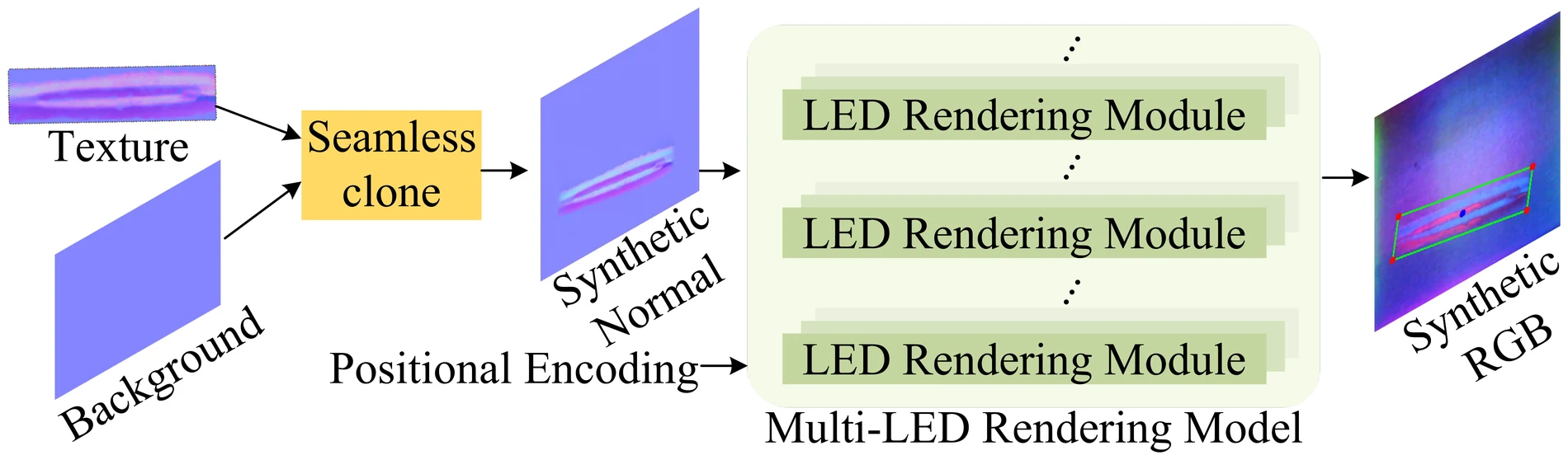
A spatially varying multi-LED model estimates illumination and reflectance parameters for reliable reconstruction and rendering.
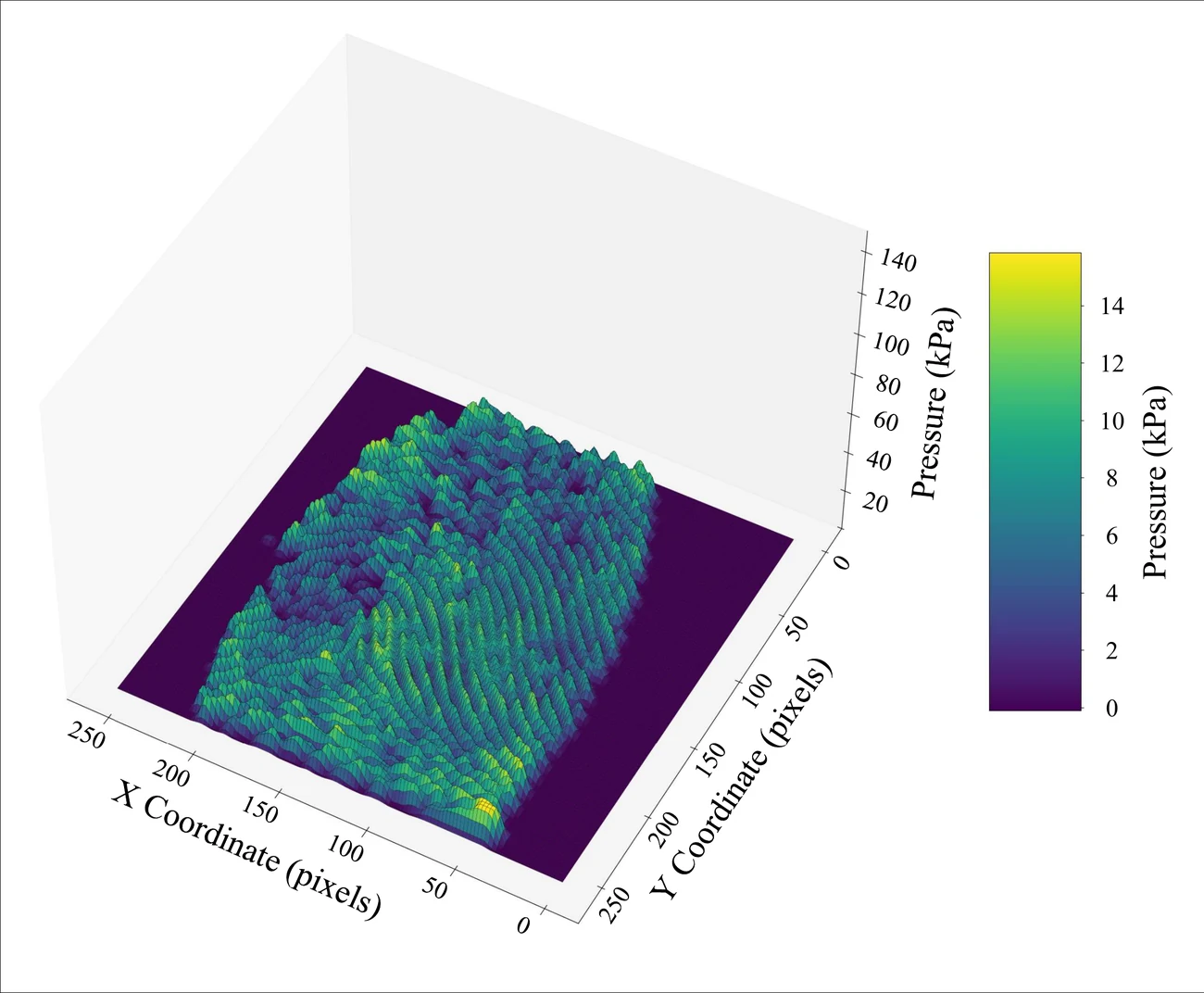
Neural inverse rendering produces tactile observations that support force estimation, pose estimation, fingerprint recognition, and slip detection.
02 · Sensor system
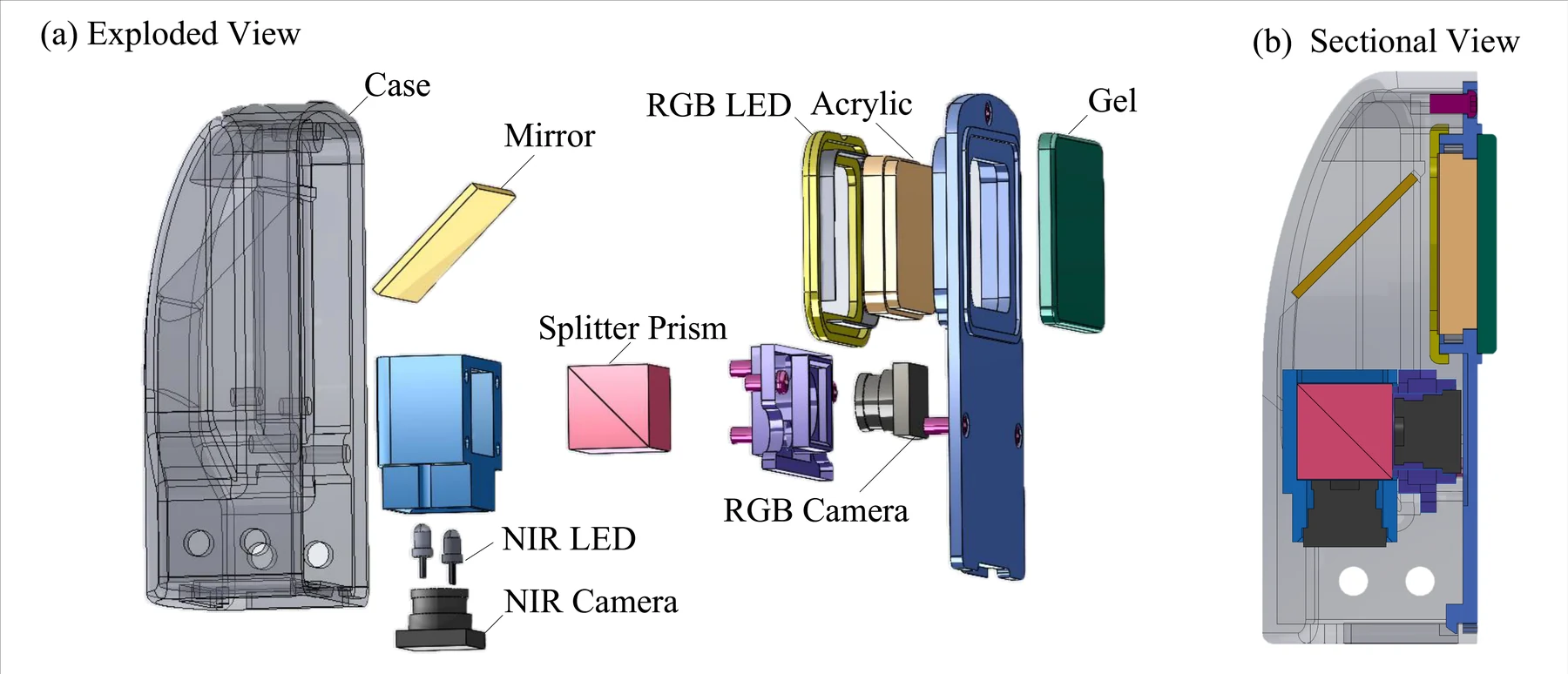
GelSplitter couples a compliant tactile interface with visible and near-infrared imaging. The complementary observations improve photometric conditioning while retaining the spatial coverage required for robotic contact tasks.
The calibration process jointly identifies geometric, optical, and normal-force parameters, linking camera observations to surface shape and physical interaction.
03 · Method
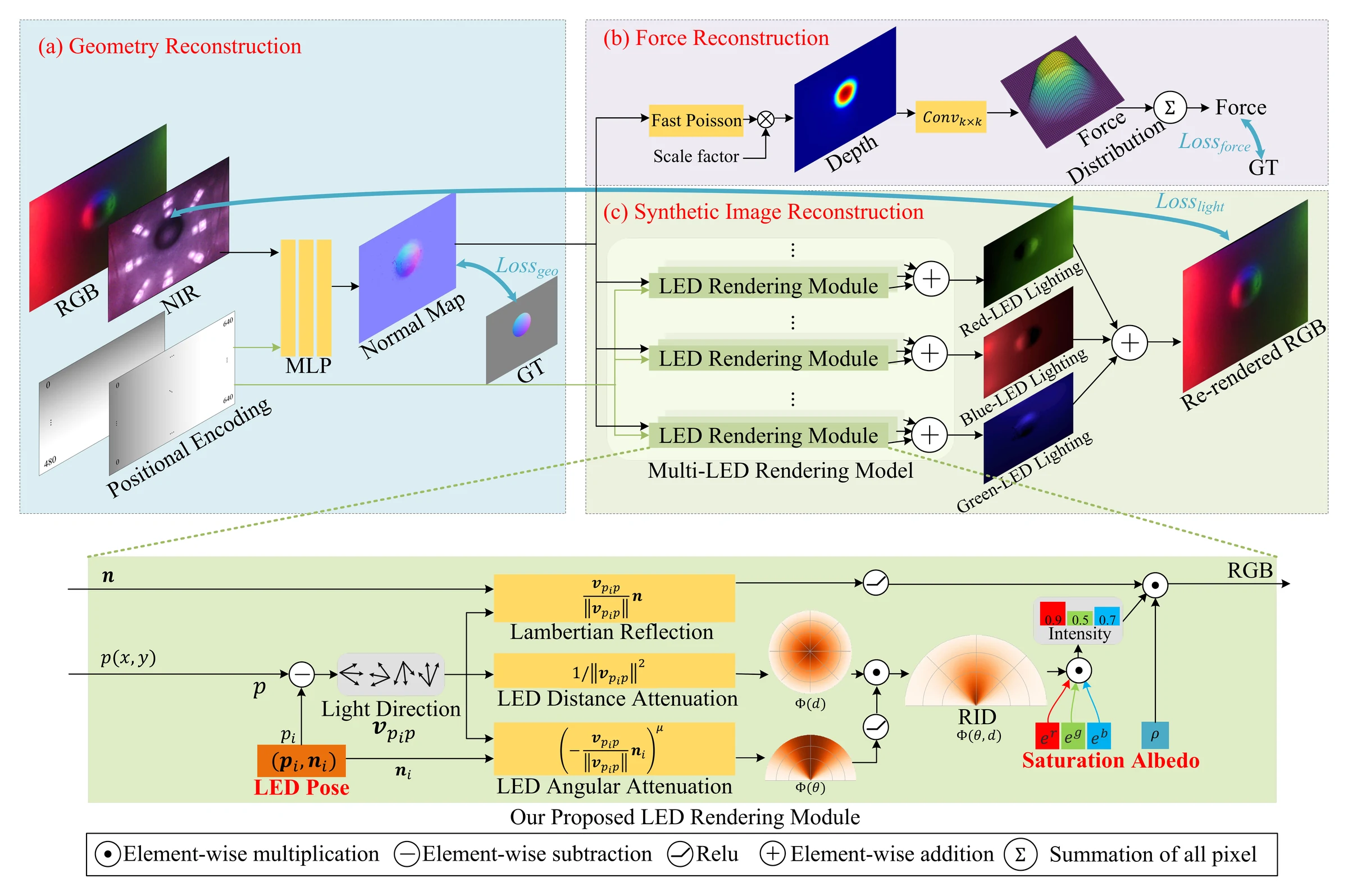
The method estimates surface normals under near-field, multi-source illumination and reconstructs tactile images through learned inverse rendering. Its shared calibration links geometry, lighting, reflectance, and normal force.
04 · Core results
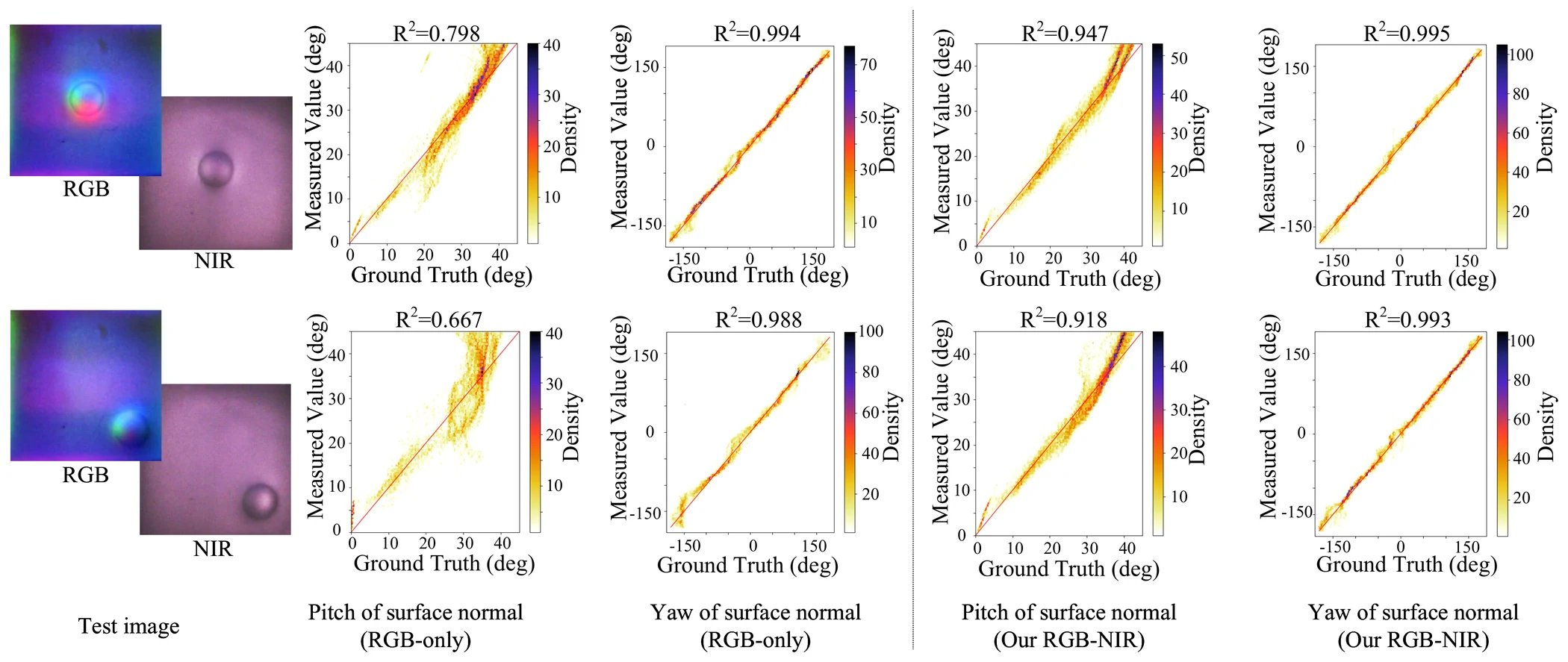
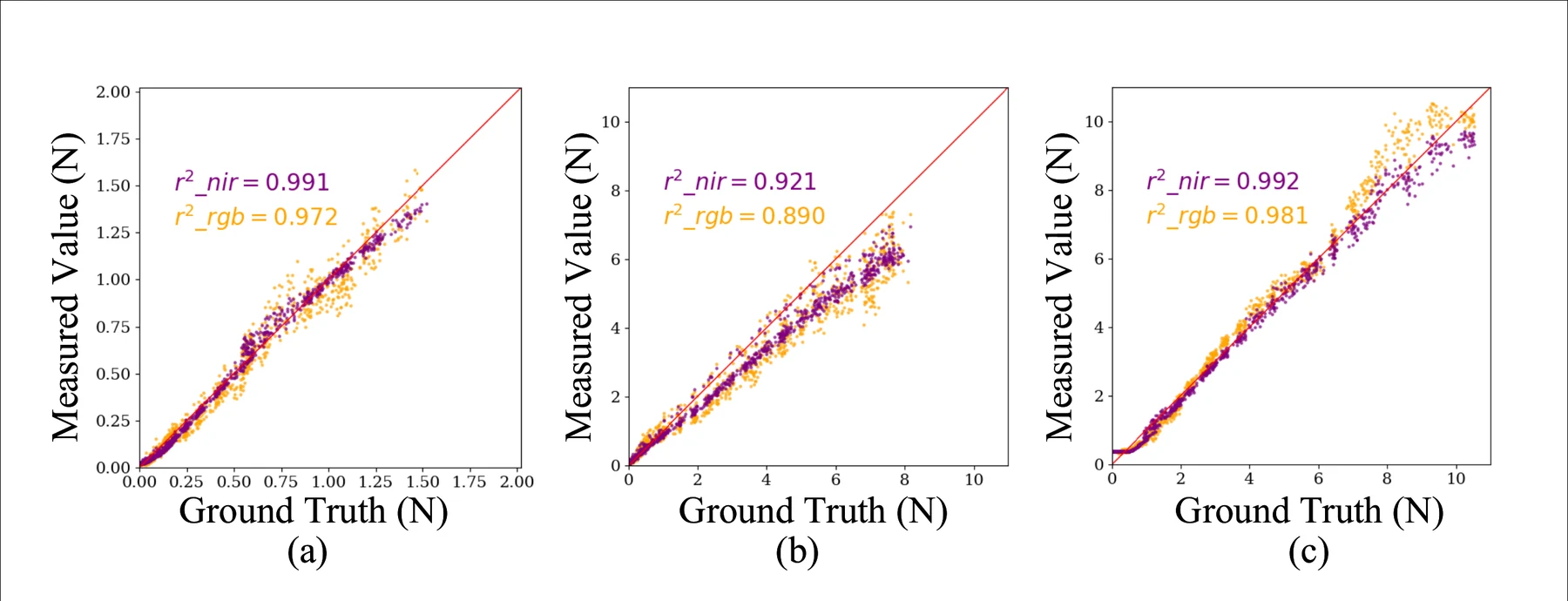
Evaluation covers surface-normal recovery, depth reconstruction, tactile image rendering, and force estimation on the sensor surface.
05 · Applications
The calibrated rendering model supports three representative downstream tasks in contact-rich robotic perception.
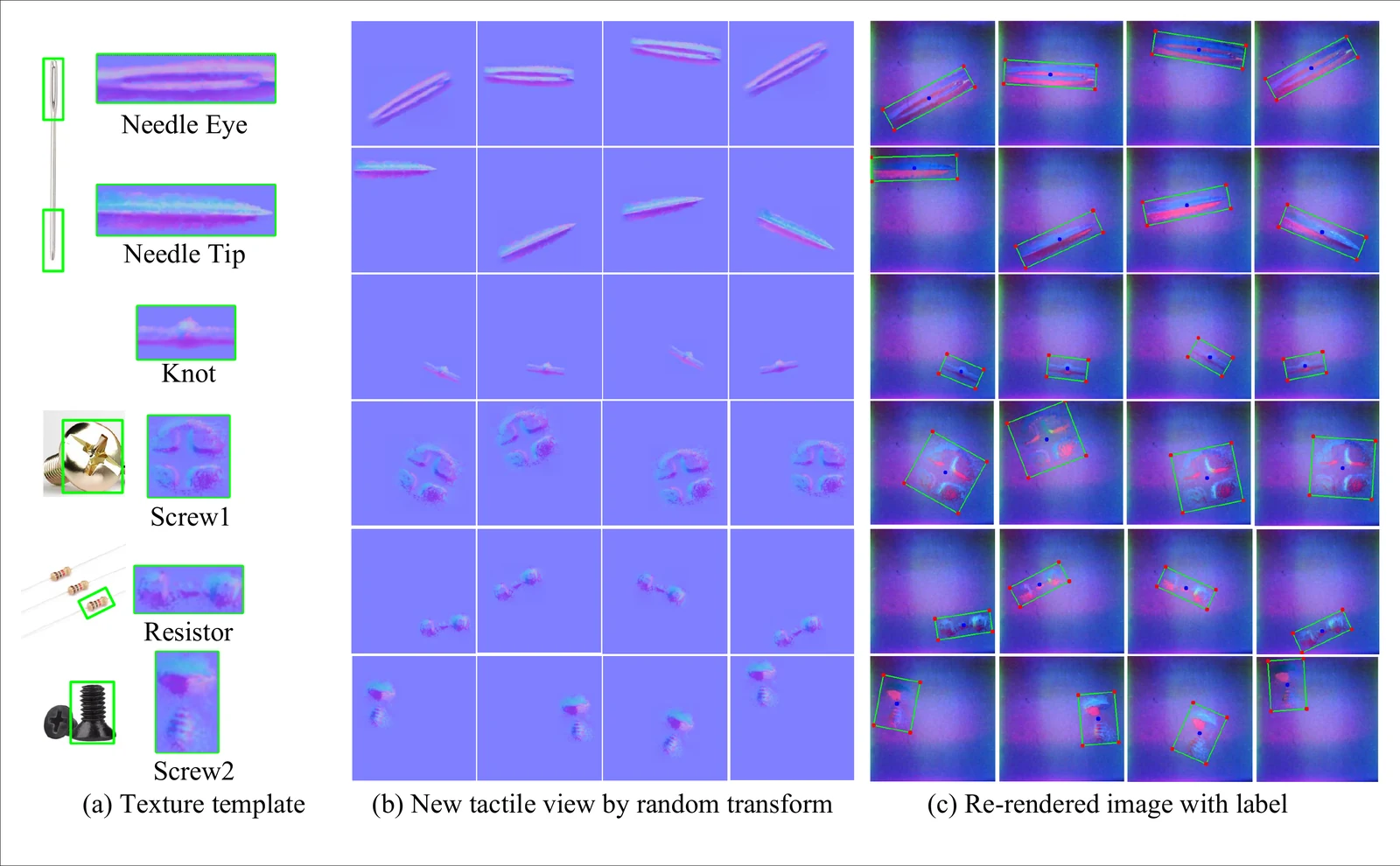
Pose estimation
mAP50–95
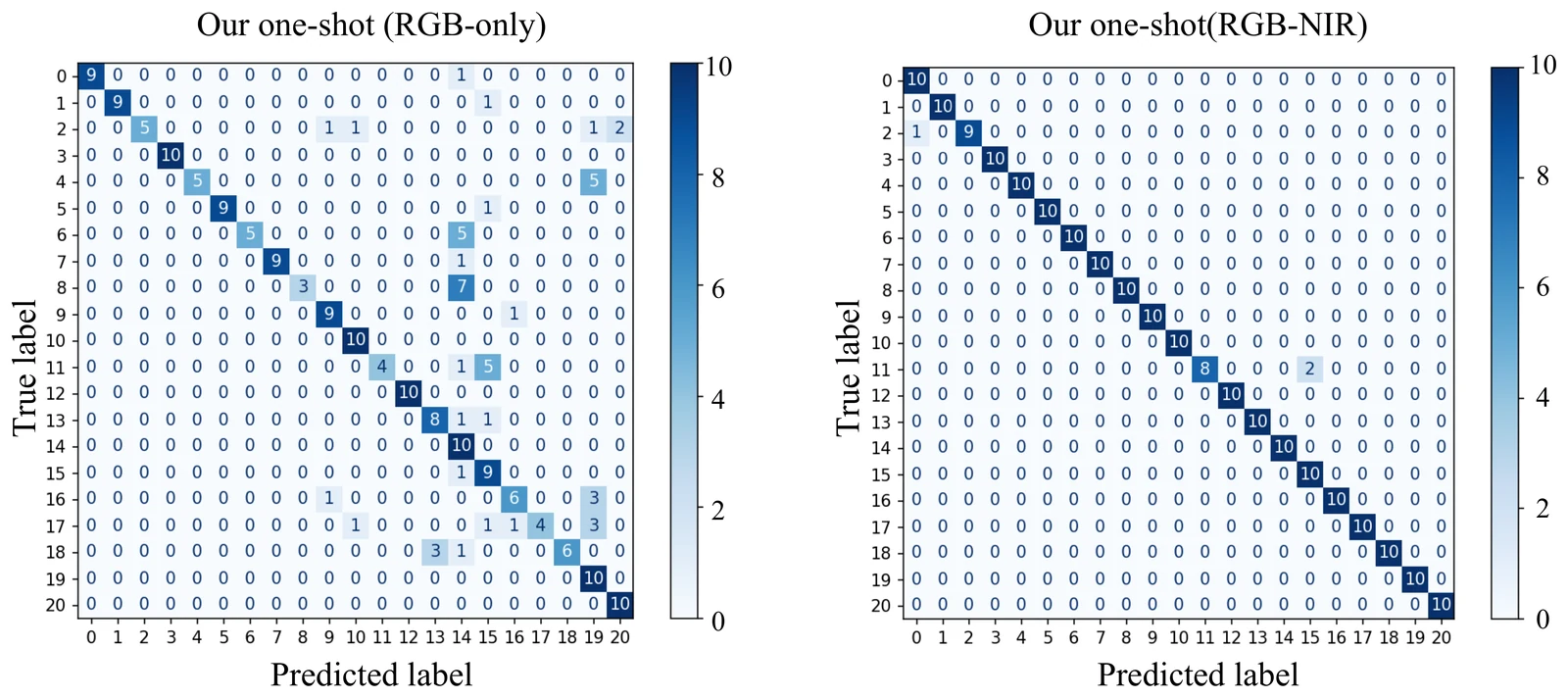
Fingerprint recognition
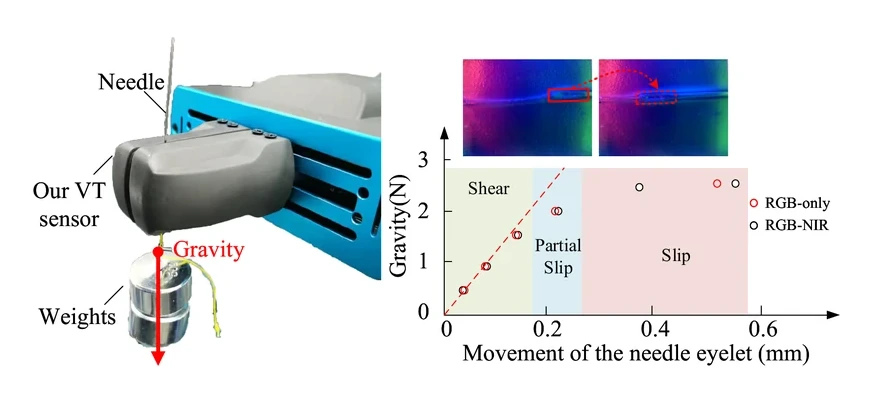
Slip detection
06 · Citation
The published paper is available from the official IEEE DOI page.
Open the IEEE paper@article{lin2025highprecision,
title={High-Precision RGB-NIR Vision-Tactile Sensor via Neural Inverse Rendering for Robotic Perception},
author={Lin, Yuankai and Lu, Xiaofan and Yang, Hua},
journal={IEEE/ASME Transactions on Mechatronics},
pages={1--12},
year={2025},
doi={10.1109/TMECH.2025.3640680}
}